Start a business
1 Are you an Entrepreneur?
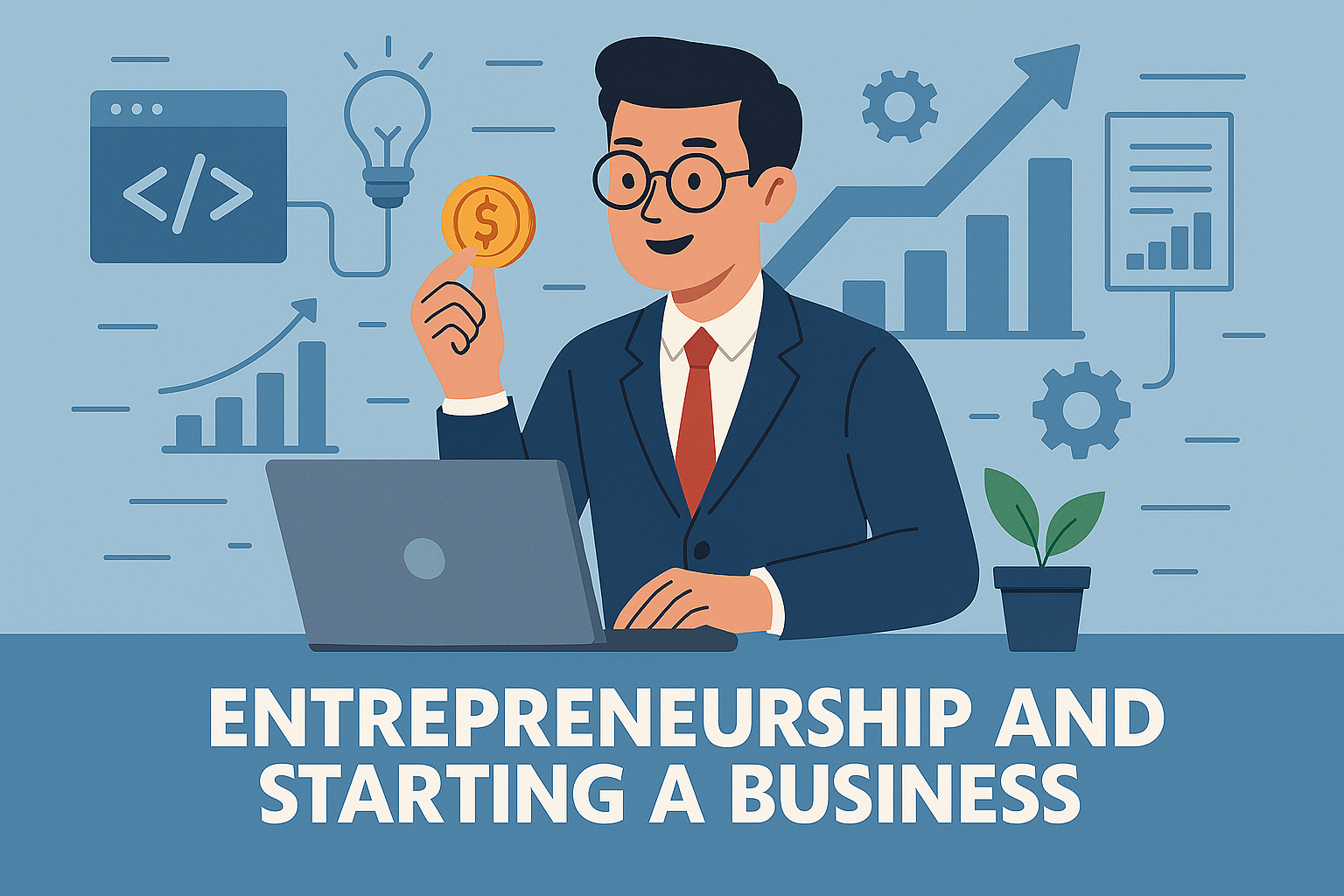
Entrepreneurship offers an exciting and rewarding path for those with a passion for innovation and a desire to be their own boss. Starting a business, especially in the tech world, can turn a great idea into a tangible product or service and provide you with a unique career journey.
1.1 The Entrepreneurial Mindset 🧠
Becoming a business owner is more than just having a good idea; it requires a specific mindset. This includes versatility, flexibility, and a comfort with risk. You’ll be wearing many hats, from developer and manager to marketer and accountant. The ability to adapt to new challenges, learn on the fly, and pivot your business model is crucial for success. Many successful entrepreneurs, like former Starbucks CEO Howard Schultz, had to pivot their original ideas to better meet customer needs.
1.2 First Steps to Getting Started 🚀
Launching a business can seem overwhelming, but it’s a step-by-step process. Here’s a basic roadmap to help you begin:
Develop Your Idea: Start by identifying a problem you can solve or a need you can meet. Ask yourself: What are my strengths and passions? How can I leverage my skills to create a product or service that a specific market wants?
Create a Business Plan: This is your roadmap. A business plan outlines your goals, strategies, target market, and financial projections. It’s a vital tool for staying organized and can be necessary for securing funding from investors or banks. For a leaner approach, you can start with a business model canvas, which is a one-page visual chart that breaks down your business into key components.
Choose a Business Structure: Deciding on your legal structure is a key early step. Common options include a Sole Proprietorship, a Partnership, or a Limited Liability Company (LLC). Each has different implications for liability, taxes, and legal requirements.
Handle the Legal and Financial Details: This is where you make your business official. You’ll need to register your business name, apply for the necessary licenses and permits, and get a federal tax ID. It’s also critical to set up a separate business bank account to manage your finances and track expenses.
1.3 Leveraging Resources 📚
You don’t have to navigate this journey alone. There are numerous resources designed to help new entrepreneurs:
Small Business Development Centers (SBDCs): These centers, often found at universities or community colleges, offer free business counseling and training.
U.S. Small Business Administration (SBA): The SBA website is a treasure trove of information, with guides on business planning, funding, and legal requirements.
Networking: Connect with other entrepreneurs through campus clubs, local meetups, and online forums. Mentors and peers can provide invaluable advice, support, and connections.
1.4 A Special Path for Veterans 🇺🇸
Veterans transitioning to civilian life often bring with them a unique set of skills—leadership, discipline, and problem-solving—that are invaluable for entrepreneurship. The federal government and various non-profit organizations offer a robust network of support to help veterans successfully launch and grow their own businesses.
Specialized Training Programs: Programs like STRIVE (Startup Training Resources to Inspire Veteran Entrepreneurship), offered by Syracuse University’s Institute for Veterans and Military Families (IVMF), provide free, rigorous training for veterans and their families. These programs cover essential topics from business planning to financial management and can provide you with the foundational knowledge needed to start a business. Pellisippi State offers STRIVE cohort classes at the Blount County Campus.
Veteran-Owned Business Certification: For veterans who own a business, getting certified as a Veteran-Owned Small Business (VOSB) or a Service-Disabled Veteran-Owned Small Business (SDVOSB) through the U.S. Small Business Administration (SBA) is a game-changer. This classification makes your business eligible to compete for federal government contracts, with certain contracts being set aside specifically for VOSBs and SDVOSBs. It’s a powerful tool that provides a competitive edge in the market.
Federal Workforce Training: The government provides numerous training and education opportunities to help veterans acquire new skills. Programs like VET TEC are specifically designed to help veterans gain IT skills through industry-leading training providers. Other programs, such as those under the Department of Labor’s Jobs for Veterans State Grants (JVSG) program, can connect you with job training, apprenticeships, and other resources to ensure you have the skills needed to succeed in a high-demand field.